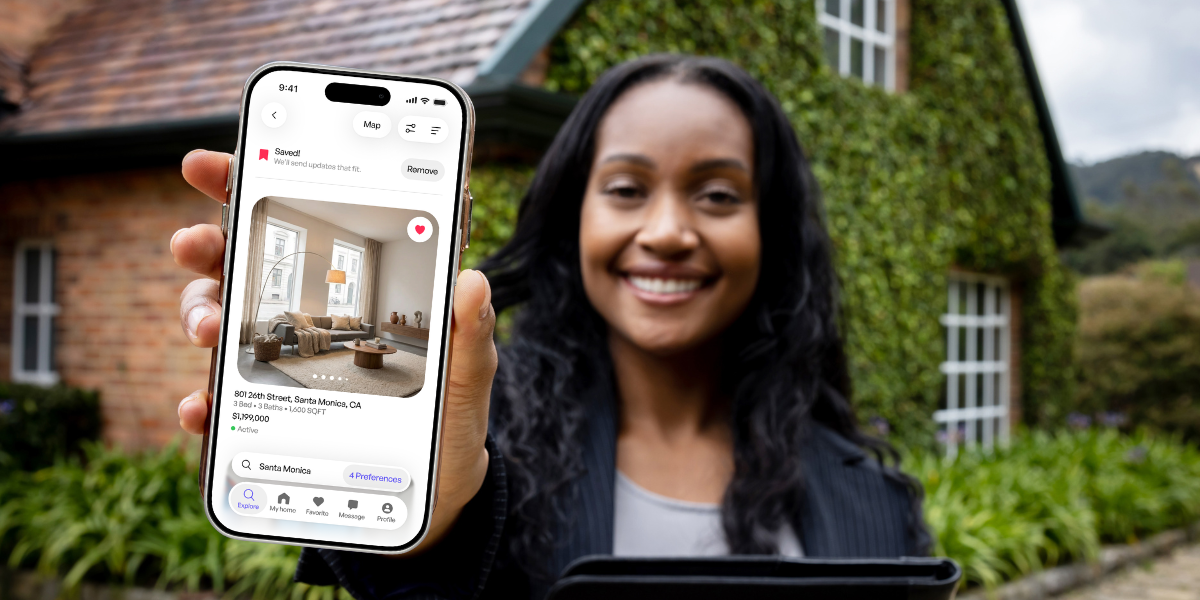
Social media strategies for real estate agents only pay off when there is somewhere for a follower to go next. HomeStack asked three top-producing agents in three different markets how they turn followers into paying clients, and the answer was the same every time: a branded app that carries the relationship from a follow, to a conversation, to a closing.
Let's be honest, racking up followers is the easy part. Likes, comments, DMs, agents are getting good at that. But turning all of that attention into an actual client? That's where most people get stuck.
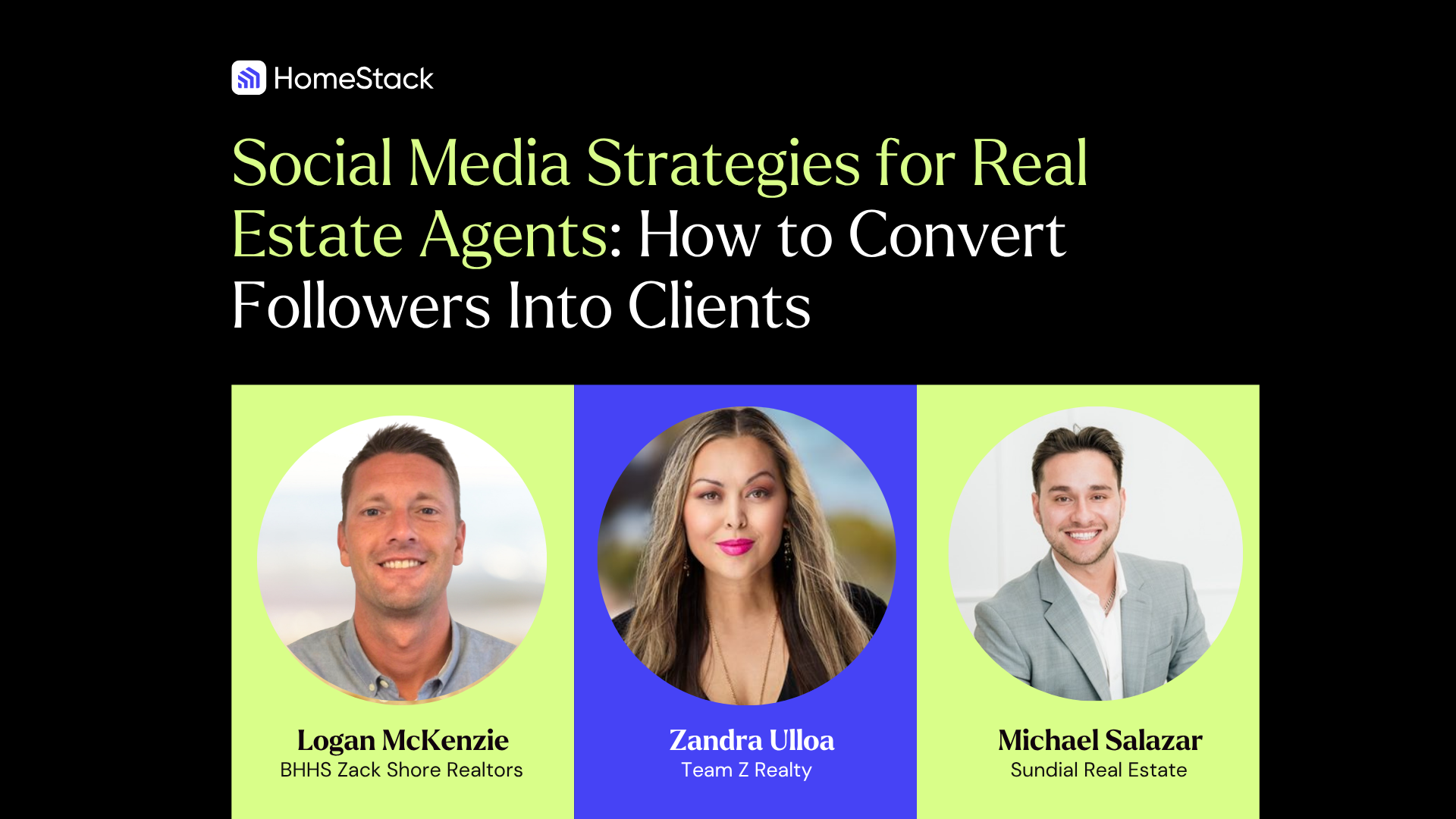
So we asked three agents who've figured it out. In a recent HomeStack webinar, Zandra Ulloa, Logan Mackenzie, and Michael Salazar sat down with us to talk about what's actually working right now. Three different markets, three totally different audiences, but here's the thing: they all leaned on the same tool to make it happen. Their branded real estate app.
Here's what they shared.
Before we get into the how, it's worth sitting with the why. Having a big following doesn't automatically mean a full pipeline. So what's actually missing for most agents?
For Logan, it comes down to giving people value first and then getting out of the way. No pressure, no forcing anything. Just showing up with something useful and letting people come to him. That approach has worked well for his business on Long Beach Island.
Zandra takes it a step further. She's not just providing value, she's proving she's the go-to community resource, connecting clients to trusted local vendors, from contractors to the best places to eat. Her app has become less of a search tool and more of a digital office people actually want to visit.
And Michael put it in a way that stuck with us: he's like the local mayor of his market. Sure, he specializes in homes, but people ask him where to get coffee just as much. That's kind of the point. When the app removes the "sold" feeling from the process, people stop feeling like they're being pitched.
The common thread across all three? The app is the bridge. It's what turns all that social content into a real pipeline.
Zandra is the Founder and Team Leader of Team Z Realty in San Diego, and she's closed over $4 billion in career sales. Her app is basically her communication hub, and if you ask her, push notifications are the star of the show. Instead of waiting around for a client to start searching, she's already ahead of them, flagging rate changes, new listings, whatever they need to know before they even ask.
She's also paying attention to what that activity actually means. Say a client bought a home two months ago and pops up active in the app again. Her first instinct isn't "they're house hunting again." It's usually something smaller, like a plumbing issue they need a referral for. So she reaches out, checks in, and keeps that relationship going well past closing.
"I stay ahead by using our push notification feature, which is my favorite."
One of her favorite moves: she'll pull up what a client favorited years ago, compare it to today's prices, and send them a notification showing exactly how much equity they could have built by now. It's a small, personal touch, and a good reminder that all that rent they've paid could have gone toward a down payment.
See how push notifications work inside your own branded app: How It Works.
Logan sells on Long Beach Island, and he's been named to Berkshire Hathaway HomeServices' President's Circle two years running, putting him in the top 2-5%
nationwide. His app covers, in his words, "everything from a beach house to a beach chair." Since LBI is a vacation spot, he built the app for everyone, not just people ready to buy or sell today. So alongside listings, you'll find restaurant picks, local activities, and everyday lifestyle content.
"I didn't want to have something that was only for somebody looking to buy or sell today."
That same mindset shows up in his content. He figures he only talks about real estate maybe 10% of the time online. The rest is just his life: mornings on the beach, his dog, whatever's actually going on that day. That's the stuff that makes people feel like they know him, and funnily enough, it's usually his non-real estate posts that drive the most app downloads.
By the time someone's ready to talk real estate, the app already feels like a natural next step.
Michael's with Sundial Real Estate in Orlando, and he landed on Real Producers' 2024 35 Under 35 list. His strategy leans into content that, on the surface, has nothing to do with real estate. He started a tier-list series on TikTok ranking local Orlando spots, kicking things off with ice cream shops, and it pulled in over 300,000 views in a week and a half. That kind of content builds him up as the local expert first, which makes the real estate trust follow naturally.
But he's quick to point out that virality alone isn't the win. Views only matter if you're actually doing the work to turn that attention into app downloads and real pipeline.
"It's free and it's better than Zillow and realtor.com."
He also brings the app into his in-person world. At his gym's community events, he runs a raffle where the only way in is downloading the app, and the only way to find out if you won is keeping it installed. Simple mechanic, but it's driven a genuinely strong conversion rate, mostly because it gets people to actually stick around in the app long enough for it to become a habit.
Three different markets, three different audiences, three different content styles. But ask any of them what actually moves the needle, and you'll hear the same answer: be authentic, be consistent, and don't get too caught up chasing virality.
Logan says it best: worry less about views, more about building an actual community. Michael's right there with him, adding that a viral moment doesn't mean much without the follow-through behind it. And Zandra ties it together nicely. Staying visible and consistent is
what makes her the person people think of first, whether that's today or three years from now.
There's no single feature that's doing all the heavy lifting here. It's the combination: consistent, authentic content paired with a branded app that actually turns that content into something real. Leads get captured, conversations keep going, and clients have a reason to come back long after the deal closes.
Want more strategies from agents like Zandra, Logan, and Michael? Follow HomeStack on Instagram and subscribe on YouTube for more.
Ready to turn your followers into clients? Book a demo of your own branded HomeStack app.
The strongest social media strategies for real estate agents combine consistent, authentic content with a clear path for followers to become clients. That path is usually a branded app: agents lead with value first, whether that is local knowledge, lifestyle content, or proactive check-ins, then let the app carry the relationship from a follow to a conversation to a closing. Consistency and authenticity matter more than any single viral moment.
Agents convert followers into clients by giving people a reason to stay in touch beyond a single post, most often through a branded app that captures downloads from social content and keeps the relationship going with push notifications, local resources, and direct messaging. The social content builds trust and visibility, and the app is what turns that visibility into an actual pipeline.
A branded app gives an agent a home base that social platforms cannot, direct communication with followers, control over the relationship, and the ability to reach people the moment they need something, like a rate update or a new listing. Social platforms build the audience, and the app is what keeps that audience close long after a post stops showing up in someone's feed.
Push notifications let agents reach app users proactively instead of waiting for them to search again, flagging rate changes, new listings, or personal milestones like the equity a past client has built since their purchase. Used well, they turn a one-time follower or client into someone the agent stays in touch with for years.
Many successful agents post about real estate only a small portion of the time, filling the rest with genuine lifestyle and local content that shows followers who they are outside of transactions. That authenticity is often what drives the most engagement and, eventually, the most app downloads and referrals.
Local content, restaurant picks, community events, everyday life, positions an agent as a trusted resource rather than someone only interested in listings. That trust is what makes people comfortable reaching out when they are actually ready to buy, sell, or refer someone else.


.png)